
Call Anwered: Iris Rainer Dart Interview: Writing Powerful Stories - From Beaches to The People In The Picture
May 22, 2011
Iris Rainer Dart is a pioneer! She brings powerful stories to life as a published author & writer in film, television & theatre.
Iris was the first female writer on The Sonny and Cher Show, has written 9 best selling novels, including Beaches, which became the iconic movie starring Bette Midler and Barbara Hershey.
Iris is now fulfilling her life-long dream of being represented on Broadway, as the author & lyricist, for the wonderfully moving musical, The People In The Picture at Studio 54, starring Donna Murphy, Nicole Parker, Chip Zien, and Megan Reinking.
The People In The Picture will play at Studio 54 through June 19, 2011!
In this interview, Iris answered my call to share:
- Her early inspirations and journey from child performer to writer and playwright
- How writing fulfills her in ways performing never did
- The dream collaborators she’d still love to create with
- What it was like breaking ground as the first woman writer on The Sonny and Cher Show
- How that TV experience shaped her personally and professionally
- The inspiration behind The People In The Picture
- Why she wants to bring Beaches to the stage as a musical
- The part of the creative process she loves most across all mediums
- Her ideal writing environment and why it fuels her creativity
- The best advice she’s ever received
- So much more
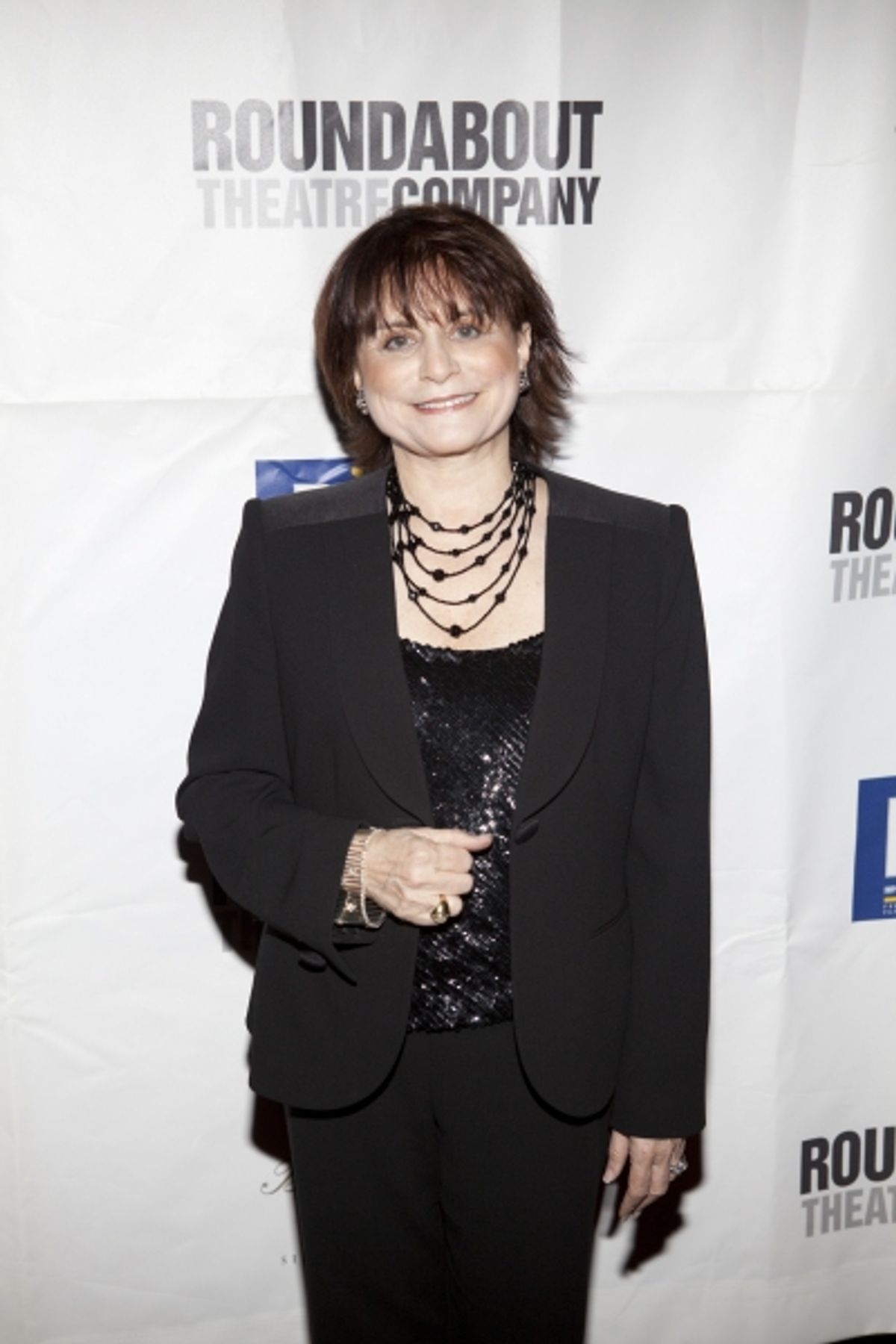 Iris Rainer Dart
The People In The Picture Opening Night
Photo Credit: Broadway World
1. Who or what inspired you to become a performer and then a writer/playwright? I have a sister who was my "Mama Rose." She is seven years older and she dragged me to auditions at the Pittsburgh Playhouse when I was five where, much to my surprise, I got the coveted role of "Blinkers the Owl" in a Children’s Theater production.
That audition actually inspired the first scene of Beaches, only unlike "Cee Cee," I got the part. The result was a career as a child actress in Pittsburgh at the Playhouse, at The White Barn Theater (I played "Helen Keller" in The Miracle Worker) and on local TV where I appeared regularly on a show called Happy’s Party.
But, I never loved acting. I always said it was like beating my head against the wall. It felt so good when I stopped.
In the early sixties I met Michele Brourman in high school. She was a young (thirteen) composer (I was sixteen), we got together, and started writing shows for Jewish organizations all over Pittsburgh, booking ourselves with Michele’s mother as our manager.
I should have thrown acting over then and just run away with Michele to write for theatre, but for some reason, I applied to what was then called Carnegie Tech and was accepted as an acting major, so I enrolled and stayed for four years.
It was while I was at Carnegie that I pitched an idea to the powers that be for the varsity musical and they readily accepted it. The summer after my sophomore year, I wrote the book and the lyrics to a show called Whatserface, and I wrote most of it while I was acting in Summer stock at the Surflight Summer Theater in Beach Haven.
When I got back to Pittsburgh, after the summer in which I’d played Carrie in Carousel and Lola in Damn Yankees and Claudine in Can-Can, I got a call from an incoming freshman to Carnegie who wanted to write the music for my show. I met, and loved him, and we wrote two years worth of varsity shows together and guess what! It was Stephen Schwartz.
2. What do you get from writing that you didn't get from performing? As a writer, I can write all day and night, even if nobody buys it or reads it or watches it or cares. I don’t need to wait for a call to do it, or an audience to appreciate it. And I love that.
I love the solitude of it and the satisfaction of it and the privacy of it. Ultimately most of it gets put out there in the marketplace, but the process of creating people and worlds is my favorite part of all of this.
3. Who is the one person you haven't worked with that you would like to? I love Meryl Streep and since I am known for creating roles for women I would love to create one for her. Though I have to say, I have worked with Bette and Cher and this year with Donna Murphy and those were some pretty special times with some knockout talents. I would love to work with John Kander too. His music is such wonderful good-old-fashioned show music, my favorite kind. With melodies.
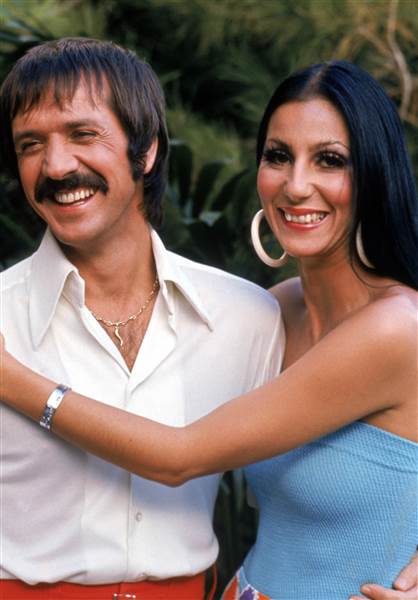 Sonny & Cher
4. What was it like to be the first woman writer on The Sonny and Cher Show? Working on that show was so much fun that I couldn’t believe I could get a paycheck at the end of it. For the first two years, I was the only woman and the guys were very afraid of Cher, so they would push me in to her dressing room to find out what she would and wouldn’t do on the show. The result was that I became friends with Cher and always admired her extraordinary ability to continuously re-invent herself in the best way.
Years later, when I saw her in Moonstruck I cried, because I saw a side of her that friends get to see, but the public doesn’t. A very vulnerable woman. We did a segment on her show called “Saturday Night Home from a Date.” It was during the time she was doing her own show without Sonny for two years, and was single. It was specifically designed to reveal the unmade-up, funky girlie side of her. The segment always worked because she loved being her real self.
5. What did that experience do for you either personally or professionally or both? What I learned most by working on that TV show was how to get work done in the midst of a time crunch. For that reason alone, writing for TV is a great school, so that when Andy Blankenbuhler and Lenny Foglia came to me in rehearsal for The People in the Picture and said, “We need a whole new number in this spot,” I didn’t blink. I just said, “You got it.” Then I went back to the hotel and wrote it.
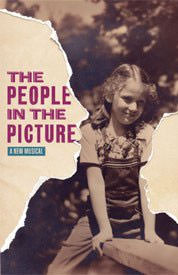
6. What made you want to write The People In The Picture? What excites you most about having it on Broadway? I wanted to write a story about the power of laughter. Both my Mother and my Father were immigrants. My Mother came to America from Russia and my Father from Lithuania. My Father put himself through college and became a social worker in a settlement house in Pittsburgh’s Hill District, a neighborhood which was later made famous by August Wilson in his wonderful plays. We had no money. We were always behind on payments to the phone company, the utilities and the grocery store. But the great thing was that we had something money couldn’t buy. A group sense of humor that enabled us to laugh at all adversity. So my memories of my childhood are about laughing, telling jokes and singing. I saw my first Broadway show when I was fourteen. It was Gypsy starring Ethel Merman. Need I say more?
I knew, as I sat there marveling at the sound of the orchestra playing that thrilling overture, and watched Merman practically kick the back door down as she entered through the house that I wanted to have something to do with Broadway.
Then, as I often say, I took a wrong turn at Hollywood, and stayed there for many years. (Some years out of necessity, because I was a single Mother raising a son, and needed to earn money). But I never stopped thinking about the two years I spent at Surflight when I was in 24 outstanding musicals. (I could win in a game of musical theatre Name That Tune).
So every year, I managed to come to New York to attend every musical there was to see, and then, with a bigger budget than my parents had, I was able to bring my own children to the Broadway theatre as often as possible.
My grandson is seven and has seen six Broadway musicals. I read him Wendy Wasserstein’s children’s book Pamela’s First Musical, and that was how he decided he had to see his first one, and I saw him fall in love with them the way I did. Broadway musicals are my first and last love, and I will be back soon with another shot!
7. What makes you want to bring Beaches to the stage? At the risk of sounding too self congratulatory, because Bette Midler deserves most of the credit, Beaches has a huge following. It too, was not received so lovingly by the critics, but since the release of the film in 1989, I have heard from many many people who love it. Every gender, every age. There was even a bar in Scotland named after the lead character, Cee Cee Bloom.
What enables me to write it as a musical is that Cee Cee, like Raisel in The People in the Picture, is a performer who sings. And the story is universal because so many people have treasured a friendship at some point in their lives.
8. Does your method/approach to writing differ based upon which medium you are writing for? I sit at the computer every day, seven days. I don’t have hobbies. I live in the golf kingdom of the world, but the idea of me venturing out on a golf course makes me laugh out loud. I often say that aside from being a Mother and a wife, I don’t know how to do anything other than write. And now that I’ve written for the theatre, as impossibly difficult as it has been, I am planning to stick around and write more theatre.
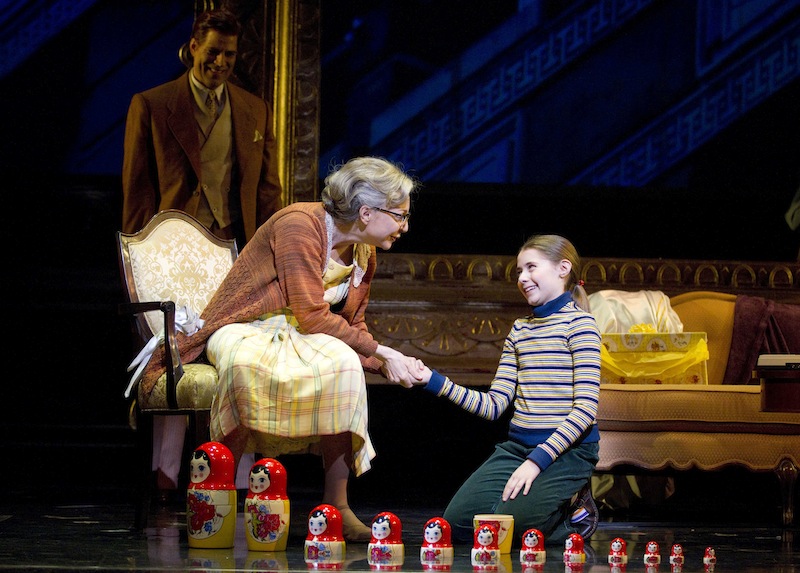 Donna Murphy in The People In The Picture on Broadway
9. What is your favorite part about the creative process in a project, whether it be a book, writing for TV show, film, or the stage? I love the people and the way they think, I love the rehearsal process, I love the live sound of the music. On this show, for reasons of scheduling, I got to work with both David Loud and Paul Gemignani, and I admired them both. I am sitting at home now in the quiet of my office, and I do miss being in the room rehearsing.
10. Favorite place to write? Definitely my messy office in my house. It gets very foggy here and I have a fireplace for those days. I also have drawings on every wall by my grandchildren, an easel with a huge roll of paper that encourages the children to make art, and photos everywhere of the people I love. Sister, late brother, parents wedding photo from 1919, photos of the family together at events, of course the Beaches poster, and now the poster of The People in the Picture ready to go up. Also, a beautiful photo from Donna Murphy that she gave me on opening night. The room embraces me like a warm hug.
BONUS QUESTIONS:
11. Favorite website? I don’t really have one. I bounce around according to what interests me at the moment. Usually it’s theatre related.
12. "Mary" or "Rhoda"? I notice in some of your interviews you ask people if they are Mary or Rhoda, and on others Superman or Wonder Woman. So I am going to answer the second one and say I am Wonder Woman.
In the 70’s, I wrote a spec script co-incidentally for The Mary Tyler Moore Show, because that was the show I watched the most. (I can throw my hat in the air with the best of them). That script landed me a job on a TV special produced by George Schlatter, which led to four years of work with Cher and Sonny and Cher and ten years of never being out of work in the TV business, the writing of nine novels, one that was made in to a movie they still talk about, raising a family (my daughter is in theatre), having close and wonderful friends, marrying an extraordinary man with whom I have been married to for 30 glorious years, honored to have been the commencement speaker at my alma mater, Carnegie Mellon, while I am still marveling that they took me in, and this year seeing my original, not-based-on-anything musical come to Broadway. I am the happiest luckiest woman on the planet.
13. What's the best advice you've ever received? When I was seventeen, and in summer stock outside of Pittsburgh at The White Barn Theater, there was a big sign backstage (I can still remember the smell of paint and glue and make-up that filled that musty old building). It said Illegitimus Non Carborundum. Which I now know is mock Latin. But one of the actors loosely translated it for me as meaning, "Don’t Let the bastards wear you down." Good advice, especially in the theatre. And I don’t.
14. If you could dream about anyone while you sleep, who would be? I often dream of my parents who both died much too young. Usually the dream takes place on a bus where we are all passengers. When they get up to leave, I am very sad knowing they have to. But I wake from those dreams feeling as if I have had a lovely visit from them. I like to think that they are in my mind and heart the way the gang of friends is in The People in the Picture.
More Iris Rainer Dart Interviews:
2018 (Read Here): Revisiting The People In The Picture
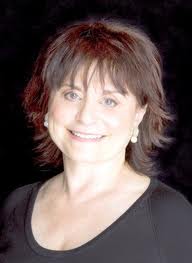 Iris Rainer Dart
More on Iris Rainer Dart:
Born in Pittsburgh, PA, Iris Rainer Dart started her career as a child actress on the stage of the "Curtaineers," the first inter-racial theatre group at the Irene Kaufman Settlement where her father was a social worker. She went onto to attend classes at the Pittsburgh Playhouse where she performed at as well as with The White Barn Theater.
Iris received her degree in theatre from Carnegie Mellon University where she won the BMI awards for libretto and lyrics she wrote for the varsity musical with the one and only Stephen Schwartz.
Iris moved to Los Angeles where she became a member of the Columbia Pictures contract workshop. During her time in Hollywood, Iris wrote for both situation comedy and long-form television including Chico and the Man, The Odd Couple, and The John Davidson Show before turning to novels.
Iris was the first female writer on The Sonny and Cher Show, wrote 9 best selling novels, including Beaches, which was turned into the now legendary motion picture starring Bette Midler and Barbara Hershey.

